May 2, 2026 • Margot Vellacourt • 9 min reading time • Prices verified June 3, 2026
Litter-Robot 4 at $699: What You'll Actually Spend Over Five Years
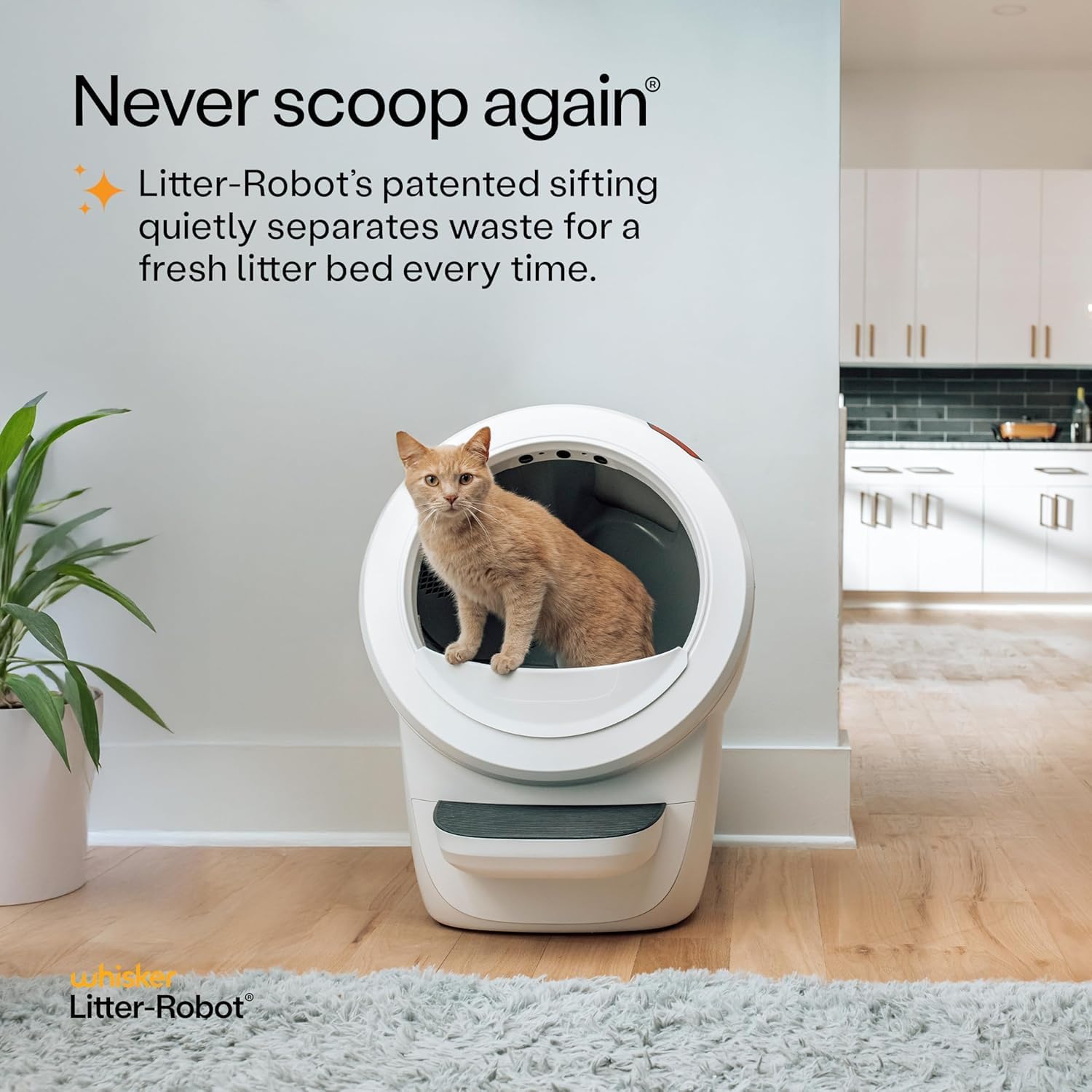
The Litter-Robot 4 is a self-cleaning litter box — meaning it automatically sifts clumps after each cat visit and deposits waste into a sealed drawer below, so you’re not scooping by hand every day. At $699, it’s one of the most expensive consumer pet products you’ll encounter, and the sticker price alone is enough to make most people pause. But here’s the thing: the $699 is actually the easiest part of this purchase to evaluate. The harder math lives in the five years that follow — replacement liners for that waste drawer, carbon filters to control odor, litter consumption, an optional subscription plan, and the occasional repair. This article is a full cost-of-ownership breakdown. By the end, you’ll have a realistic number for what a single Litter-Robot 4 costs over five years, and a clear decision rule for whether that number makes sense for your household.
The Upfront Cost Is Just the Opening Bid
When Whisker (the manufacturer, based in Auburn Hills, Michigan) launched the Litter-Robot 4 at $699, they were pricing it at a significant premium over the previous generation, the Litter-Robot 3 Connect, which currently lists at $499. For that extra $200, you get OdorTrap — an active odor-filtering system built into the unit rather than just a passive carbon filter — plus an integrated weight sensor (the SmartScale, which tracks each cat’s visit weight and can flag changes a vet might want to know about), improved cat-detection sensors, and a quieter motor cycle.
The Spruce Pets’ overview of self-cleaning litter boxes notes that the Litter-Robot 4 consistently earns top marks for multi-cat homes, specifically calling out the OdorTrap system and the SmartScale health-monitoring feature as differentiators in the premium tier. Wirecutter has repeatedly positioned the Litter-Robot line as the most durable self-cleaning option available to general consumers, with the caveat that the price point demands that owners treat it as a long-term appliance — not a gadget.
That appliance framing matters because it’s how the math works. At $699, the Litter-Robot 4 costs roughly $11.65 per month over five years on hardware alone. That’s before you touch a consumable.
The Real Recurring Costs, Broken Down
This is where most buyers get surprised. Here are the four spending categories that stack on top of the hardware cost.
1. Waste Drawer Liners
The Litter-Robot 4 uses a carbon-infused liner that fits the waste drawer (the pullout tray at the base). Whisker sells these in packs: a 25-count pack runs approximately $19, a 50-count runs around $30. Each liner typically lasts 7–10 days depending on how many cats you have and how often the drawer cycles.
For a single-cat household cycling the drawer every 7–10 days, you’re consuming roughly 40–50 liners per year — call it two 25-count packs, or approximately $38/year. For a two-cat household cycling every 4–6 days, you’re closer to 70–80 liners per year, pushing toward $60–65/year. Three or more cats can hit 90–100 liners annually.
Five-year liner cost by household:
- 1 cat: ~$190
- 2 cats: ~$310
- 3+ cats: ~$400–450
Note that third-party liners exist (standard 8-gallon kitchen liners often fit), and owners across long-run reviews consistently report mixed results — some work fine, some tear on the drawer rail and create a mess that offsets any savings. Your risk tolerance here is a real variable.
2. OdorTrap Pods and Carbon Filters
The Litter-Robot 4’s OdorTrap system uses replaceable OdorTrap Pods — a charcoal and carbon media insert that sits inside the unit’s active odor system. Whisker recommends replacing these every 30 days, though owners in multi-cat households report replacing them every 20–25 days in practice.
A 3-pack of OdorTrap Pods runs approximately $15 at current Whisker pricing. At one pod per month, that’s five 3-packs per year ($75/year) for a typical single-cat user or six packs ($90/year) for heavier use. Over five years, this line item alone runs $375–$450.
PetMD’s editorial guidance on litter box odor management notes that active filtration makes a meaningful difference in enclosed or smaller living spaces — which is relevant context if you’re in an urban apartment and this was part of the value proposition.
3. Litter
The Litter-Robot 4 is optimized for clumping clay litter and performs best with litter that clumps tight and doesn’t contain excessive dust. Whisker sells their own branded litter but it’s not required. Standard premium clumping litter (the kind that works well in automatic units) runs roughly $25–35 for a 25–40 lb bag depending on brand and retailer.
Multi-cat households typically use 30–50 lbs of litter per month. At $25–30 for a 40-lb bag, a two-cat household might spend $600–$900 annually on litter — a cost that exists independent of which box you’re using, but one that the Litter-Robot 4 can actually reduce via its sifting efficiency. Owners consistently report using noticeably less litter compared to manual scooping, because sifting separates and retains clean litter rather than dragging it into the waste drawer with clumps.
For five-year cost purposes, we’ll treat litter as a wash — it’s a real cost, but not a new cost created by this purchase.
4. The Whisker App and Connect Subscription
The Litter-Robot 4 comes with the Whisker app built in, and basic connectivity (cycle history, notifications, remote control) is included with the hardware purchase at no additional charge. However, Whisker offers a Connect+ subscription tier that unlocks expanded health analytics, multi-unit management, and priority support. As of early 2026, Connect+ runs approximately $99/year.
This is optional, but owners who bought the Litter-Robot 4 specifically for the SmartScale health data tend to find the expanded analytics worth the subscription — the base app gives you visit counts and weights, but Connect+ gives you trend lines, vet-shareable reports, and anomaly alerts. If health monitoring was on your checklist, budget for it.
Five-year subscription cost: $0 (base) to $495 (full Connect+)
By the Numbers: Five-Year True Cost
Here’s the consolidated math at current 2026 pricing, for a two-cat household using OdorTrap pods monthly and Whisker liners:
| Line item | 5-year cost |
|---|---|
| Hardware (Litter-Robot 4) | $699 |
| Waste drawer liners (2 cats) | ~$310 |
| OdorTrap Pods (monthly) | ~$375–$450 |
| Connect+ subscription (optional) | $0–$495 |
| Total range | $1,384–$1,954 |
For a single-cat, no-subscription household: closer to $1,264. For a three-cat, full-subscription household: closer to $1,844–$2,100.
What Can Go Wrong: Repairs and the Warranty Reality
The Litter-Robot 4 carries an 18-month warranty from Whisker (extendable to 3 years with their extended protection plan, approximately $99 at time of purchase). Apartment Therapy’s feature on whether the Litter-Robot is worth the investment raised the valid point that motor and sensor repairs after the warranty period — the most common failure modes cited in owner forums — can run $75–$150 for parts and more if you’re shipping the unit in.
Over five years, plan for at least one minor repair or replacement part. Call it $100–$150 as a reasonable buffer.
The extended warranty math is worth running: $99 upfront to extend coverage to 3 years versus a likely repair cost of $100–$150 in year 2–3 is essentially break-even, with the warranty adding the value of not dealing with the diagnostic hassle. If you have two or more cats and expect heavier mechanical wear, the extended warranty is worth it.
The Alternative: What Does Skipping This Cost?
The honest comparison isn’t Litter-Robot 4 versus nothing — it’s Litter-Robot 4 versus the PETKIT PURA X at $199 or the Litter-Robot 3 Connect at $499, or versus manual scooping at effectively zero hardware cost.
The PETKIT PURA X (reviewed favorably by The Spruce Pets for its compact footprint and lower entry price) has a lower five-year consumable profile — its liner and filter costs run roughly $200–$250 over five years — but owners in long-run evaluations consistently note that the motor assembly is less robust under multi-cat load, and the health monitoring is substantially less capable than the LR4’s SmartScale.
The Litter-Robot 3 Connect saves you $200 upfront but lacks the OdorTrap system and the SmartScale, which are the two features that make the LR4’s price defensible at the five-year level. If those features don’t matter to your use case, the LR3 Connect is a legitimately strong value.
Manual scooping with a premium litter and a standard covered box costs roughly $0–$50 in hardware and the same litter spend as above — but Wirecutter’s testing notes have consistently observed that the time cost of daily scooping in multi-cat households is real, and the odor control in enclosed spaces is materially worse without automated cycling.
The Decision Rule
If you’re genuinely evaluating whether the Litter-Robot 4 at $699 makes financial sense, here’s the framework:
If you have one cat and odor control is a moderate priority: The five-year cost lands around $1,264 (no subscription), which is $253/year. That’s defensible as an appliance, but the Litter-Robot 3 Connect at $499 may serve you just as well for $200 less upfront.
If you have two or more cats, live in an apartment, and want health monitoring data: The LR4 is the correct unit. The five-year cost of $1,384–$1,700 (with Connect+) works out to $277–$340/year — roughly $23–$28/month — for a device that actively monitors your cats’ weight trends and keeps odor contained in a small space. That’s a reasonable maintenance budget for two animals.
If health monitoring doesn’t matter to you: Run the math on the LR3 Connect instead. The five-year gap between the two units is roughly $200 in hardware plus the OdorTrap pod cost differential — not catastrophic, but real money.
If you’re unsure whether your cats will accept the unit: Whisker offers a 90-day return window on direct purchases (confirm current terms at whisker.com before ordering). Buy direct, not through a third-party retailer, to preserve that window. The acclimation risk is real — some cats refuse the globe entirely — and the 90-day window is your insurance policy. Don’t surrender it to save $20 on a marketplace discount.
The Litter-Robot 4 is genuinely the most durable, most data-rich automatic litter box available to consumers right now. It’s also the one with the most expensive five-year cost profile. Those two facts are related. Whether $1,400–$1,900 over five years is a fair price for what it delivers depends almost entirely on how many cats you have, how much your living space amplifies odor problems, and whether vet-useful weight data is a feature you’ll actually use — or just a feature that looked good in the product video.
Know your answer to those three questions, and the purchase decision basically makes itself.